
A Cryptographic Identity Can Replace API Keys
Combining a persistent Nostr identity with FIPS networking could let software arrange access across apps without sending users through accounts, domains and copied credentials.
Read the snack ↗ IntelligenceSnacks
The archive
Each snack is a self-contained argument developed from a long-form conversation.
Episode 72
The Internet We Deserve ↗Combining a persistent Nostr identity with FIPS networking could let software arrange access across apps without sending users through accounts, domains and copied credentials.
Read the snack ↗
An AI agent can turn mature applications on one computer into an adaptive production pipeline by choosing the right tool for each task and iterating towards a defined standard.
Read the snack ↗
A FIPS-based Wingman prototype made laptop-hosted apps reachable from other devices without first provisioning the usual public web infrastructure.
Read the snack ↗
FIPS gives computers direct, secure addresses so their files and services can be reached without first moving them into the cloud.
Read the snack ↗
FIPS lets peers find a path to a computer or application, then carries IPv6 traffic across whatever underlying connection is available.
Read the snack ↗
Bringing intelligence onto a user’s device lets agents work with local software, files and processing power instead of recreating the whole environment in the cloud.
Read the snack ↗
A Nostr identity can turn files held across several FIPS-connected computers into one browsable index without moving them into a hosted repository.
Read the snack ↗Episode 71
The AI Industry is Wrong ↗
As AI absorbs routine work, people inherit a smaller stream of unresolved decisions that demands sharper attention and clearer presentation.
Read the snack ↗
Complex expertise becomes easier to execute consistently when it is divided into small decisions that people, models and tools can handle separately.
Read the snack ↗
Machine customers can turn reusable information into a market by comparing the price of an existing artifact with the cost of creating it again.
Read the snack ↗
Agents are useful for finding a path through unfamiliar work, but repeatable execution belongs in a bounded workflow.
Read the snack ↗
Agents create lasting value when the processes they discover are captured as reusable software that runs reliably at a fraction of the original cost.
Read the snack ↗
Reliable AI workflows keep known operations in ordinary code and call an agent only when flexible judgement is genuinely useful.
Read the snack ↗
A polished AI answer can create more risk than value when a business needs work it can safely rely on.
Read the snack ↗Episode 70
The Malleable Computer ↗
Short, timestamped notes can bring more of a podcast into view while asking less of both the writer and the audience.
Read the snack ↗
The value of widely available intelligence emerges when people apply it to a real business, idea or point of pain.
Read the snack ↗
AI can help shape creative work without hollowing it out, provided the creator supplies the substance, judges the output and remains responsible for the finish.
Read the snack ↗
As software becomes cheaper to create, recurring agent work can move beyond a universal chat into personal interfaces shaped around the job.
Read the snack ↗
Signed device access could make locally hosted Autopilot WApps available through Wingman without turning every installation into a public internet service.
Read the snack ↗
Keeping exploratory work in conversation creates room for each useful question to expand the ambition of what is being built.
Read the snack ↗
As agent jobs stretch from minutes into hours, working with them becomes less like a rapid exchange and more like managing several unfinished tasks at once.
Read the snack ↗Episode 69
AI Agent Economies ↗
A hybrid monitoring workflow keeps sensitive data local, reserves frontier models for anomalies and turns repeatable answers into dependable software.
Read the snack ↗
Businesses can adopt AI more easily when one provider translates a desired outcome into a complete working service.
Read the snack ↗
Cheap machine payments create a dangerous asymmetry when an anonymous agent can use infrastructure whose operator remains identifiable and accountable.
Read the snack ↗
AI can give one person the capacity to package years of expertise or solve a small personal problem, then distribute the result far beyond its original setting.
Read the snack ↗
Giving an agent limited spending power lets it complete routine purchases without surrendering human control over consequential payments.
Read the snack ↗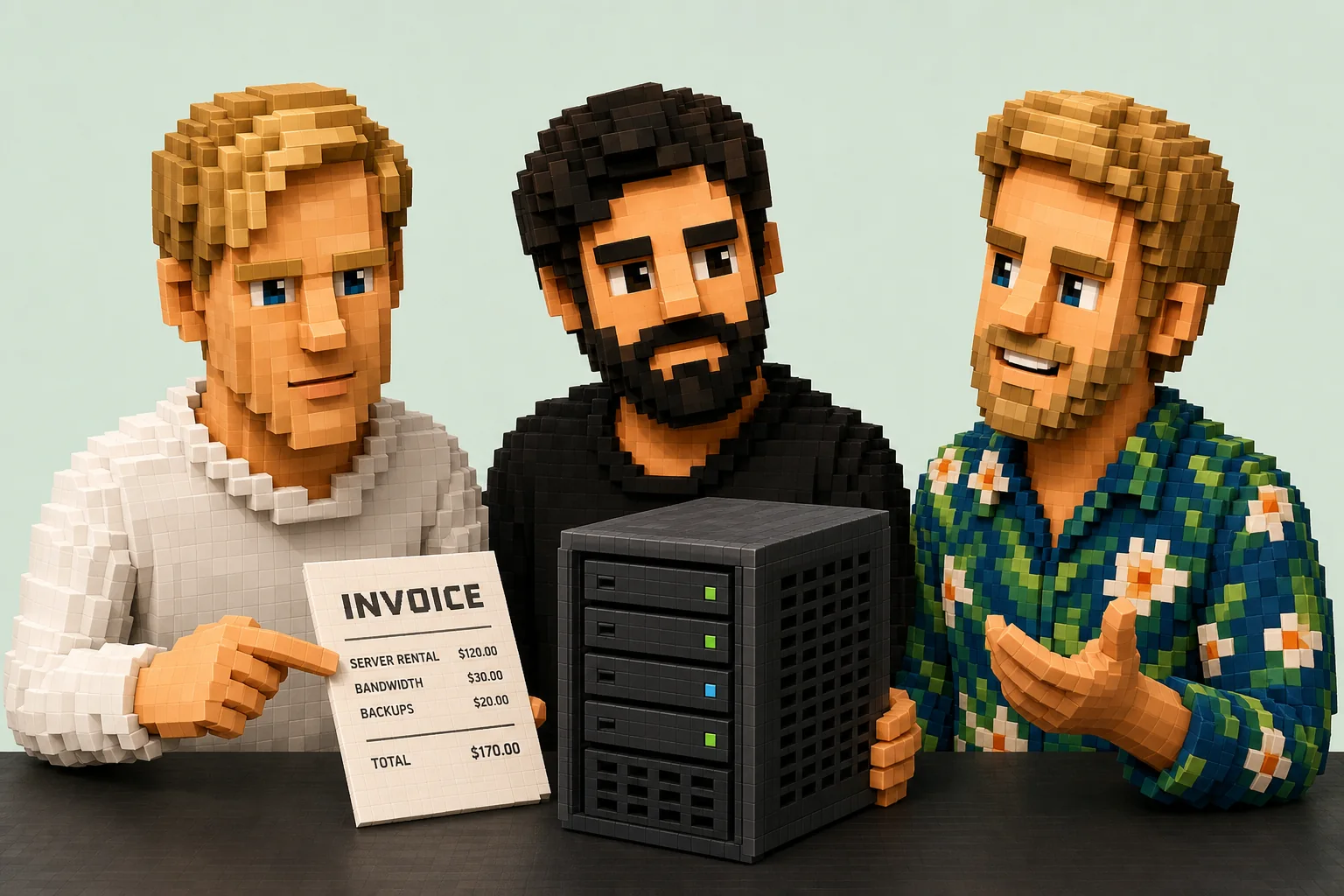
A wallet gives an AI agent the means to rent infrastructure, move its runtime and pay to keep itself online.
Read the snack ↗
An agent that gathers and analyses its own evidence can turn an ordinary research request into an unauthorised intrusion.
Read the snack ↗Episode 68
One-Person Startups ↗
Cheap AI experimentation lets a solo founder spread entrepreneurial risk across several business ideas instead of staking everything on one company.
Read the snack ↗
AI lets small software entrants reproduce established products at far lower cost, creating a temporary opening to attack margins once protected by expensive technology.
Read the snack ↗
Cheap AI replication gives lean entrants an opening against high-margin software incumbents, but slow customer switching could stretch the contest over years.
Read the snack ↗
Live commerce makes awkward inventory economical to sell by moving it through a live stream.
Read the snack ↗
In 18 months, coding agents took Rod from needing someone else to build his ideas to supervising parallel teams that review their own work.
Read the snack ↗
AI-built internal tools could let small businesses keep efficiency gains that once flowed to software vendors.
Read the snack ↗
Rod’s experience shows how raising money to build a technology company can steadily turn a founder with control into an executive accountable to other owners.
Read the snack ↗Episode 67
Local AI Models ↗
AI automation becomes more efficient when deterministic operations stay in code and agents appear only where the work requires judgement.
Read the snack ↗
A model may fit in a local AI machine yet still respond slowly if its memory cannot supply data quickly enough.
Read the snack ↗
Flight Deck brings delegated work into one communications layer where tasks remain visible, missed activity can be recovered and access follows clear boundaries.
Read the snack ↗
For a small company in an unfamiliar category, larger rivals can bear the cost of teaching buyers before differentiation becomes decisive.
Read the snack ↗
Application-level encryption can impose more design complexity than it earns when an app already runs on its owner’s server.
Read the snack ↗
Pete’s personal newspaper turns accumulated coverage into a connected resource that his AI agents can consult for context without burdening him with another unread queue.
Read the snack ↗
Local models can handle everyday personal tasks, but hardware costs and limited awareness leave hosted frontier AI as the easier consumer choice.
Read the snack ↗Episode 66
The Coldcard Hack ↗
An agent can filter a fast-moving crisis into technically verified updates, then ease its reporting cadence as the urgency recedes.
Read the snack ↗
An agent can extend a personal knowledge map just far enough to reveal the next useful ideas, sources and connections.
Read the snack ↗
Andy designed Pliny to turn relevant updates into researched briefings that deepen as its record of his interests grows.
Read the snack ↗
AI makes repeated cyberattacks cheaper, while giving defenders ways to detect their computing footprint and raise the price of access.
Read the snack ↗
A briefing shaped around known interests can deepen understanding while making unrelated but valuable ideas less likely to appear.
Read the snack ↗
A model that refuses exploit work can also deny incident responders the tools they need to locate a known vulnerability and check other systems for the same flaw.
Read the snack ↗
A Coldcard firmware flaw turned private keys from secrets protected by an immense search space into numbers that attackers could recreate within hours.
Read the snack ↗Episode 65
Working with AI Agents ↗
Agent work is easier to supervise when each job has a visible boundary and the human can intervene before too many decisions accumulate.
Read the snack ↗
A personal agent can replace an open-ended trawl through social media with one timely story chosen from a connected view of the news.
Read the snack ↗
A pipeline can contain agent judgement without surrendering control of the wider process to an open-ended agent loop.
Read the snack ↗
A shared technical foundation makes it practical to replace generic tools with applications that encode how one company actually operates.
Read the snack ↗
Spreading attention across four agent sessions and three projects can turn building into a hard-to-follow cycle of prompts.
Read the snack ↗
A business can earn millions and still remain a time liability when its operation depends on a founder continually sending instructions.
Read the snack ↗
Signed messages give agents a verifiable way to distinguish an authorised operator from everyone else in a shared chat.
Read the snack ↗Episode 64
Vibe Coding with Power Tools ↗
Coding agents shift a developer’s attention from writing every line towards architecture, testing and review.
Read the snack ↗
Every coding model brings its own mix of literalness, initiative, caution and recurring habits to a coding session.
Read the snack ↗
Coding agents let operators turn their knowledge of workflows, exceptions and commercial pressures into working software.
Read the snack ↗
Tests, specifications and human review determine how long a coding agent can keep producing useful software on its own.
Read the snack ↗
Working software exposes missing permissions, awkward screens and workflow exceptions that an initial specification rarely captures.
Read the snack ↗
Rapid implementation lets an early choice about data, queues or background workers spread across a codebase within weeks.
Read the snack ↗
A coding harness controls which files an agent can inspect, which commands it can run and which results return to the model.
Read the snack ↗Episode 63
AI Is Great for Small Business ↗
Faster processing can expand a service business, but growth still runs through the scarce human capacity to pay attention and make sound judgments.
Read the snack ↗
Regional Prosperity uses AI to increase back-office throughput so its people can devote more attention to the relationships that make its financial advice valuable.
Read the snack ↗
For a small business under delivery pressure, AI becomes useful when it clears a bottleneck quickly enough to create value today.
Read the snack ↗
AI-assisted software building gives SMEs a practical alternative to reshaping their work around generic systems that only partly fit.
Read the snack ↗
Small firms gain speed by testing ideas cheaply and directing investment towards the constraint that is holding back the business now.
Read the snack ↗
Regional businesses of considerable scale can sit at opposite ends of the technology spectrum, creating very different challenges when their systems pass to a new owner.
Read the snack ↗
When most of an owner’s wealth sits inside a regional business, an absent succession plan puts both a family’s future and a community asset at risk.
Read the snack ↗Episode 62
AI for Freedom Tech ↗
AI tools accelerated each task, but the endless cycle of prompting, testing and new releases made it harder to stop working.
Read the snack ↗
AI can accelerate software prototypes, but cryptographic code exposes why expert developers must still control the design and review every decision.
Read the snack ↗
Coding agents can accelerate a familiar cycle of design, delegation and testing, but the faster cadence makes active oversight more important.
Read the snack ↗
AI lets one person turn a product idea into a testable prototype before recruiting a team or committing substantial capital.
Read the snack ↗
Library author Lighthazard uses AI to expand the supporting material around his work while keeping the code he cares about under his own control.
Read the snack ↗
Dividing software work into bounded jobs can make cheaper models a practical alternative to a single request sent to the largest available model.
Read the snack ↗
Pete built Wingman to turn a plain-language description of a process into an editable pipeline of code, specialised agents and loops.
Read the snack ↗Episode 61
AI Loop Engineering ↗
The useful work in agent automation is defining the goals, operating rules and handoffs that let specialised agents coordinate without constant instruction.
Read the snack ↗
When technical experimentation outruns the task, simpler systems can create more value from capabilities that already exist.
Read the snack ↗
Filtering repetitive tool output before it reaches an AI agent can cut token use while preserving the context that matters.
Read the snack ↗
Fast agent workflows create more room for iteration, but human judgement still has to redirect them before small choices compound into drift.
Read the snack ↗
When AI turns a predictable software bill into variable consumption, businesses need to measure the extra value each increment of spending buys.
Read the snack ↗
Managing AI agents like new workers turns operational know-how into reusable business systems that improve their output and reduce dependence on individuals.
Read the snack ↗
Agent loops can multiply activity at remarkable speed, but the work only matters when it produces something specific, useful and wanted.
Read the snack ↗Episode 60
Models or Harnesses ↗
A shared evidence search can fan out across many targets before separate agents pursue the most relevant lines in depth.
Read the snack ↗
Frontier labs must keep funding expensive model advances even as older capabilities become cheaper and harder to distinguish from the latest release.
Read the snack ↗
Declarative pipelines reduce AI agent drift by fixing the path through functions, steps and data while leaving people responsible for direction and course correction.
Read the snack ↗
Warnings that AI could wipe out jobs can make the technology feel like an urgent political crisis, giving leading labs more influence over the rules that follow.
Read the snack ↗
A model can find an unexpected link between mathematical fields, but novelty depends on proving it hasn't merely recovered an overlooked result.
Read the snack ↗
The strongest case for household automation is a machine that reliably removes a defined chore, not a humanoid whose broad capabilities may never justify its cost.
Read the snack ↗
An AI agent can check its progress only against a destination it understands, and defining that destination may require much of the original work.
Read the snack ↗Episode 53
Own Your AI Stack ↗
Agents can compress weeks of product review by exposing gaps in a loose brief before anyone commits to a polished interface.
Read the snack ↗
AI can accelerate each employee’s workload while leaving the business’s repeated processes and handoffs untouched.
Read the snack ↗
Reliable execution comes from making required checks part of the process, rather than instructions that a person or agent must remember to follow.
Read the snack ↗
The next leap in business automation will come from turning capable models into reliable parts of an operating system.
Read the snack ↗
An agent workforce can automate a great deal of activity while still losing its cost advantage to software that delivers the same outcome with less supervision.
Read the snack ↗
As agents absorb more operating work, a firm's ability to own and move its encoded processes becomes a condition of business control.
Read the snack ↗
A firm can turn accumulated judgement into an owned asset by encoding how it works in private instructions that agents can use.
Read the snack ↗No snacks match those filters.